

Theher Payments
2025
Supporting Right-to-Left Users
For Finance App
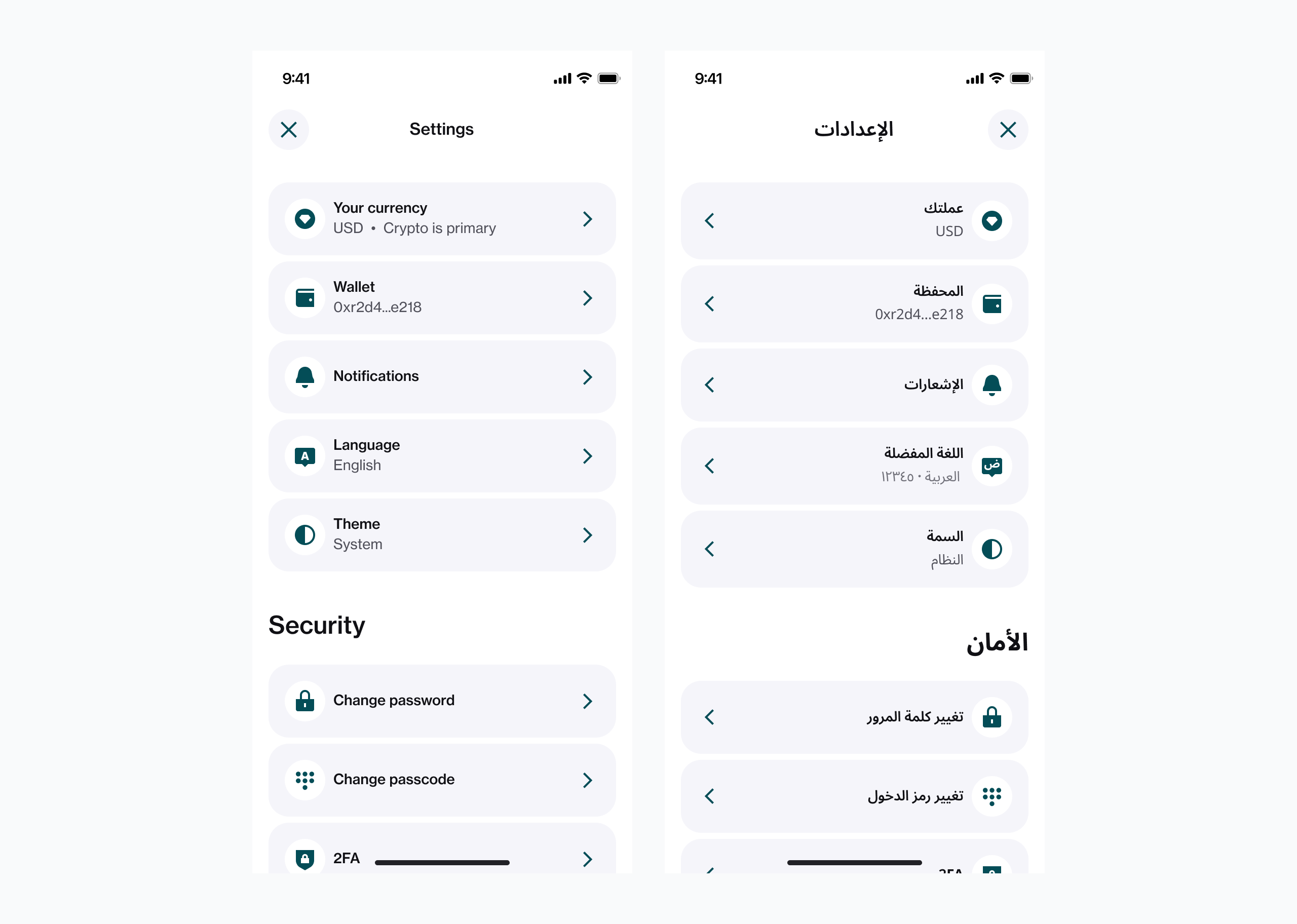
Designed to support Tether tokens, this payments app delivers a global experience with a local feel. It supports multiple languages, including right-to-left (RTL) scripts Arabic. The interface adapts to local reading directions, numerals, and symbols — ensuring intuitive, accessible use across regions.
Right-to-left (RTL) support for Arabic requires more than just flipping the layout—regional differences in script, numerals, and formatting must be considered. For this app, the focus was on serving the most widely used Arabic locales, with specific attention to Eastern Arabic numerals. These are essential for financial applications, where clarity and accuracy in currency and number presentation are critical to user trust and usability.
Results
Redesigned key transactional experiences and led localization for Arabic
markets, boosting regional retention by 10%.
Project Milestones
3.
4.
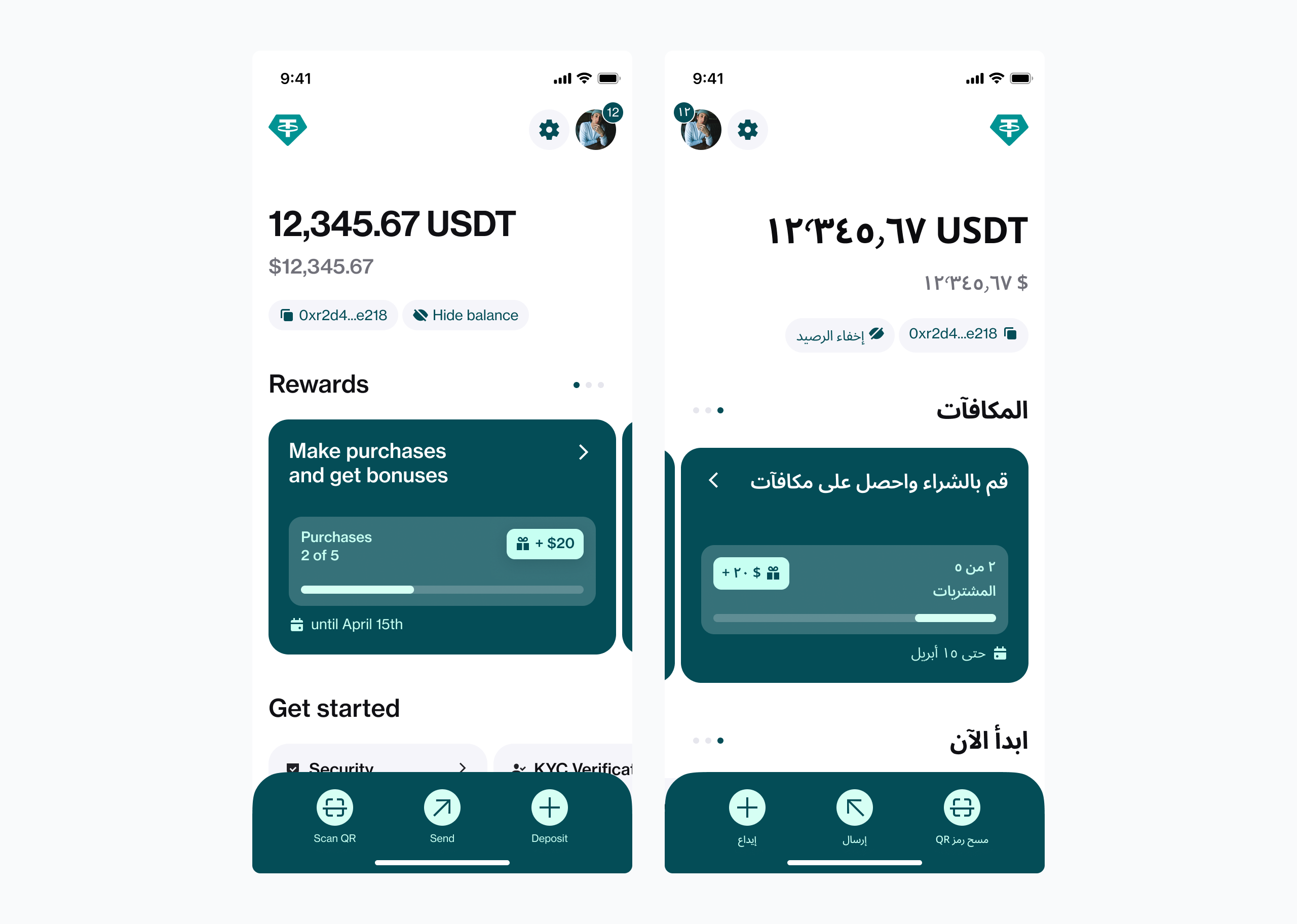
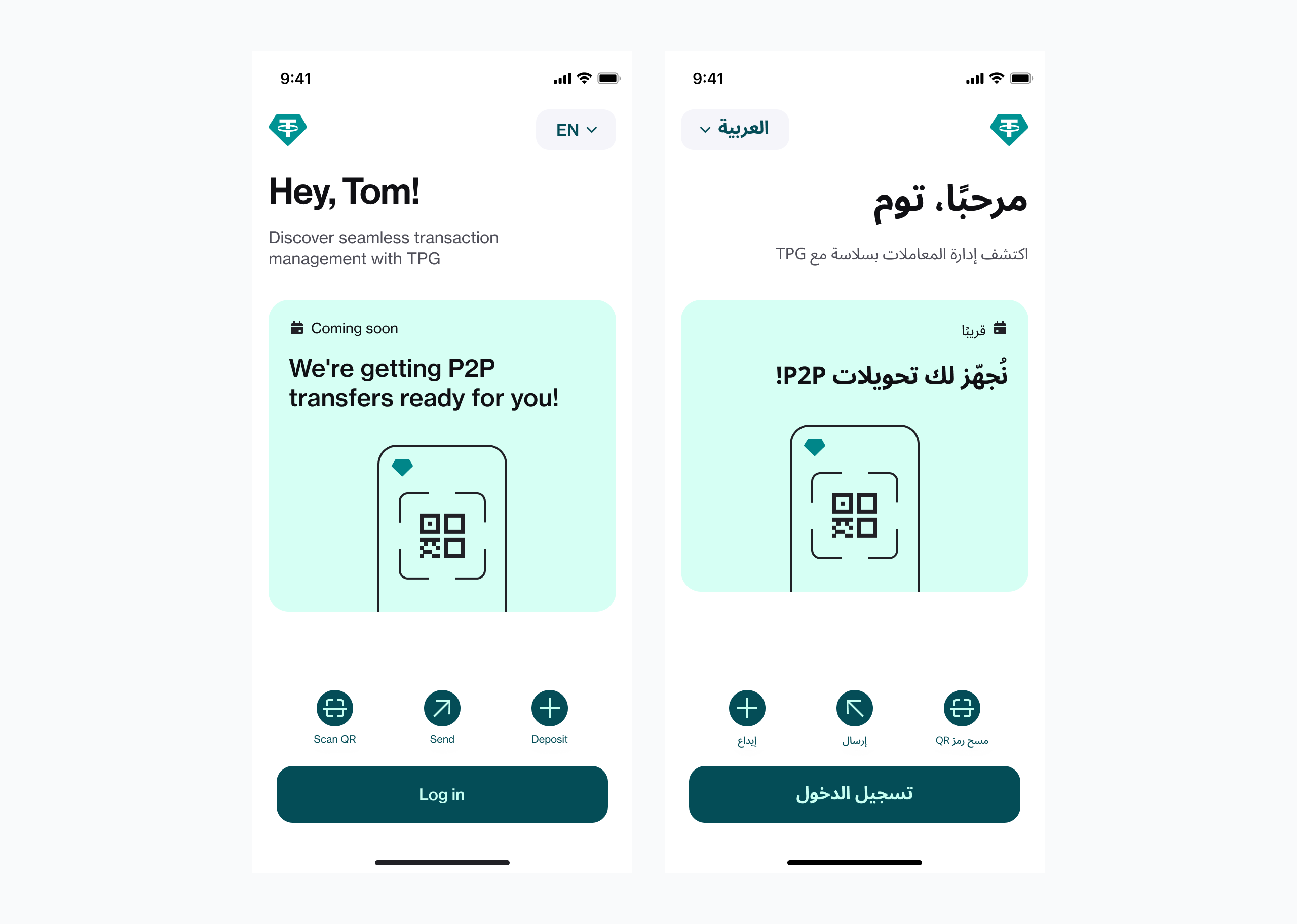
In RTL interfaces, carousels, such as galleries and banners should be mirrored from the typical left-to-right (LTR) design used in English.
Navigation in Mirrored Direction for RTL: Mastering the Details
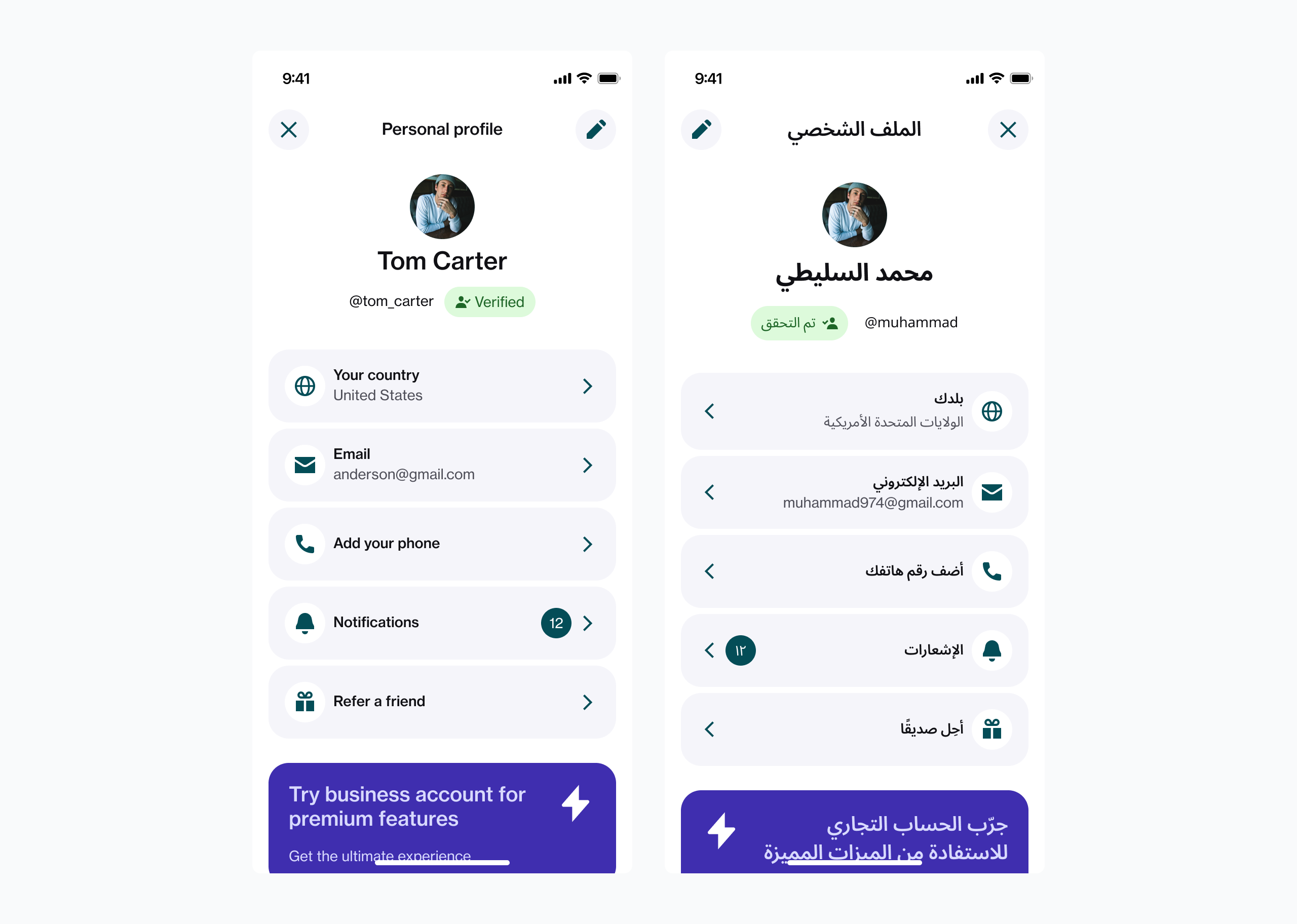
In RTL contexts, the entire screen layout should be mirrored from the typical left-to-right (LTR) design used in English. This means elements like navigation bars, tab bars, and sliders must flip direction.
For example, in an RTL navigation bar, the avatar moves to the left side, and any count badges or icons shift accordingly to maintain intuitive placement.
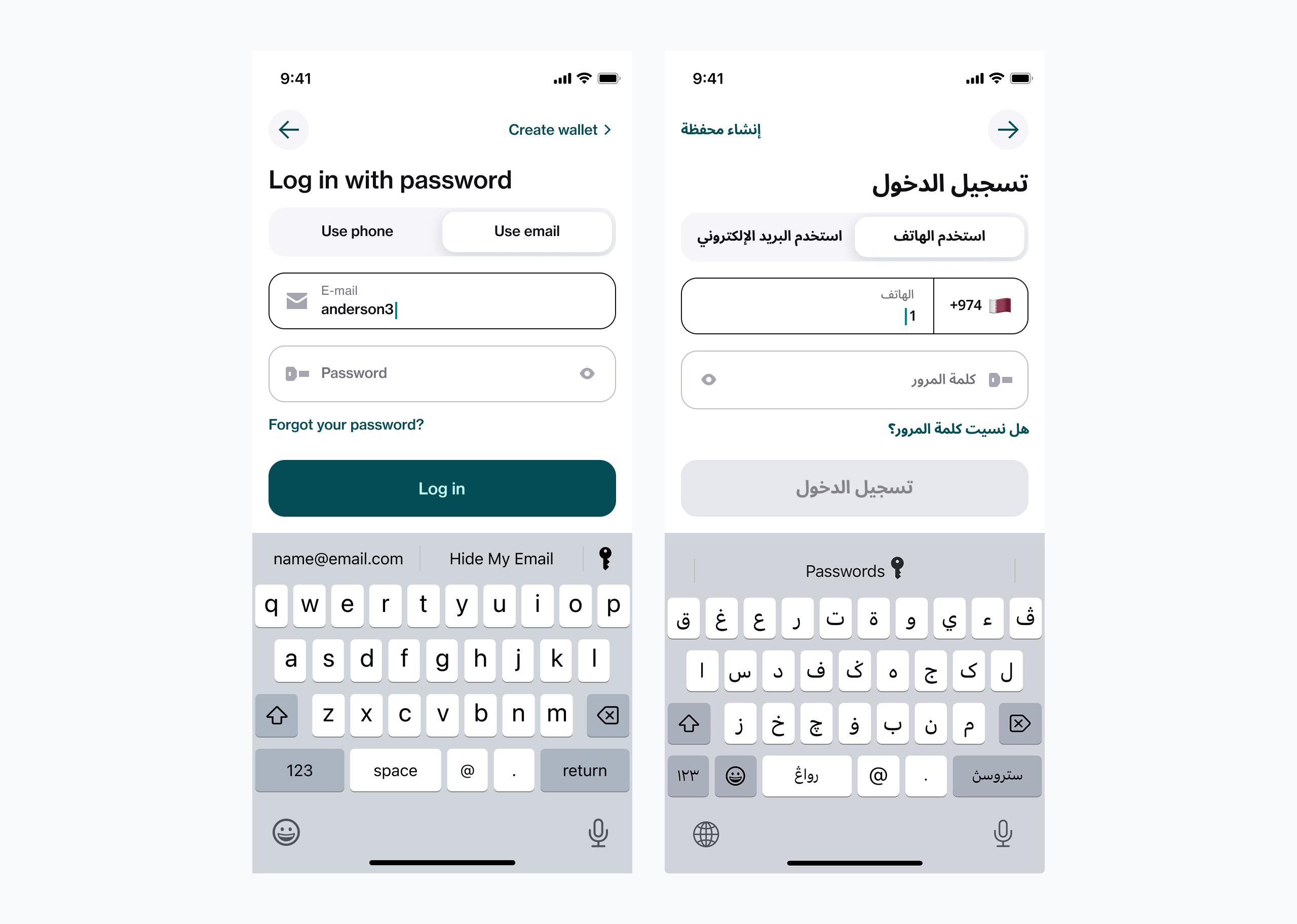
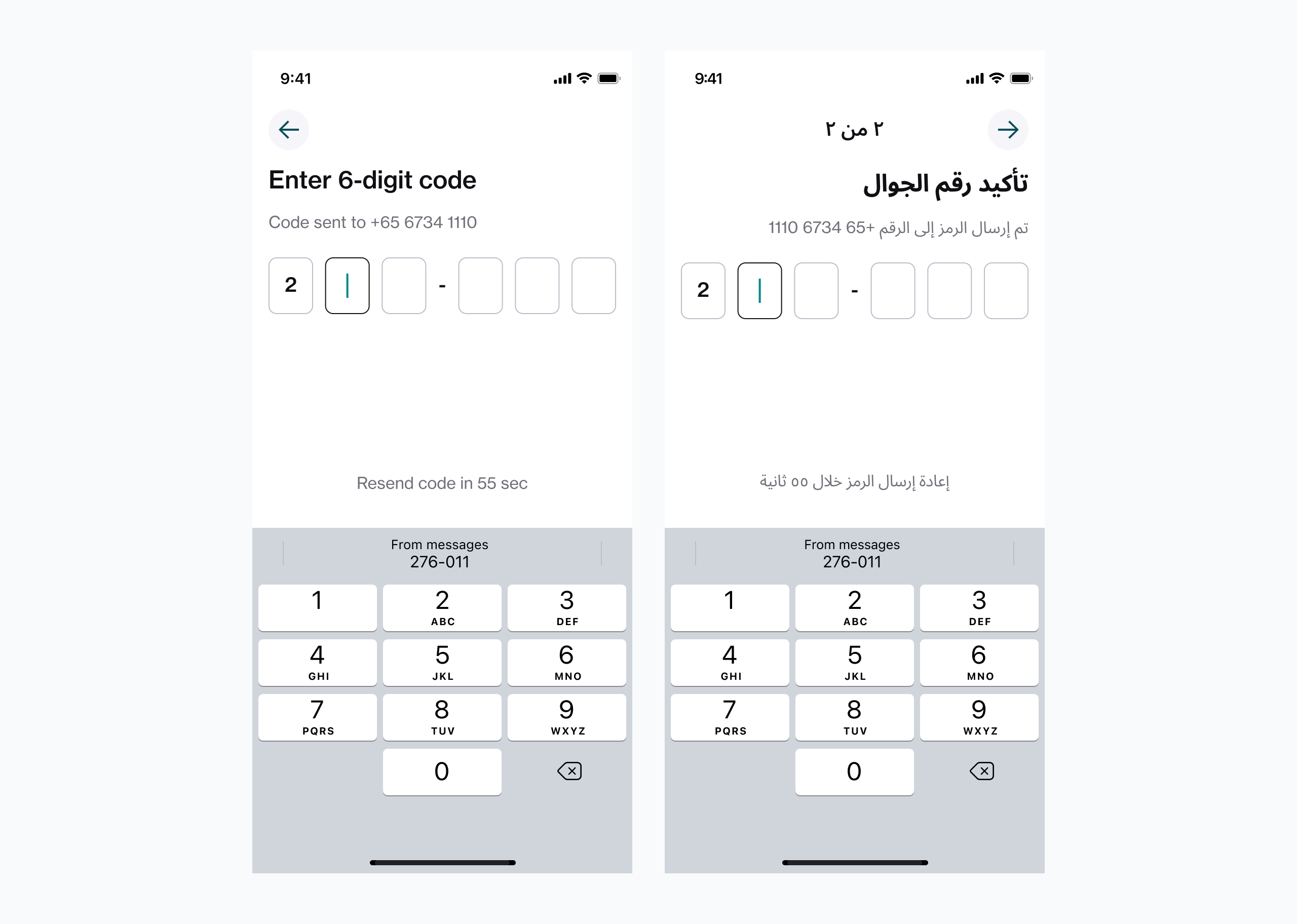
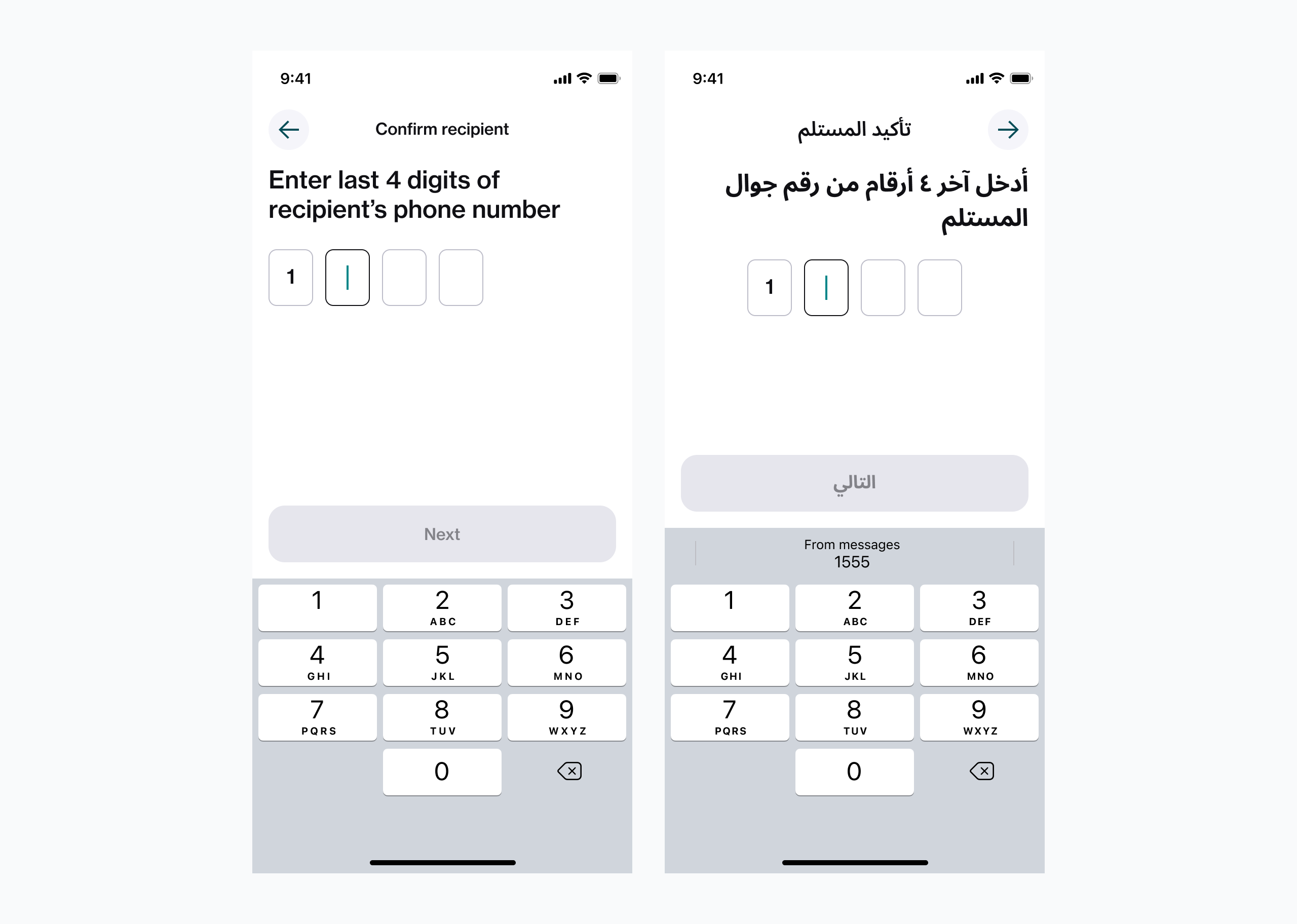
Form Fields in RTL: Navigating Technical Challenges Like Phone Number Formatting
In RTL interfaces, field labels, input cursors, and placeholder text should be flipped in a direction that aligns with the natural reading and navigation flow of right-to-left languages like Arabic.
In cases when one of the fields includes Latin symbols, such as passwords and emails, the layout will still be right-to-left to avoid mixed alignment on a screen.
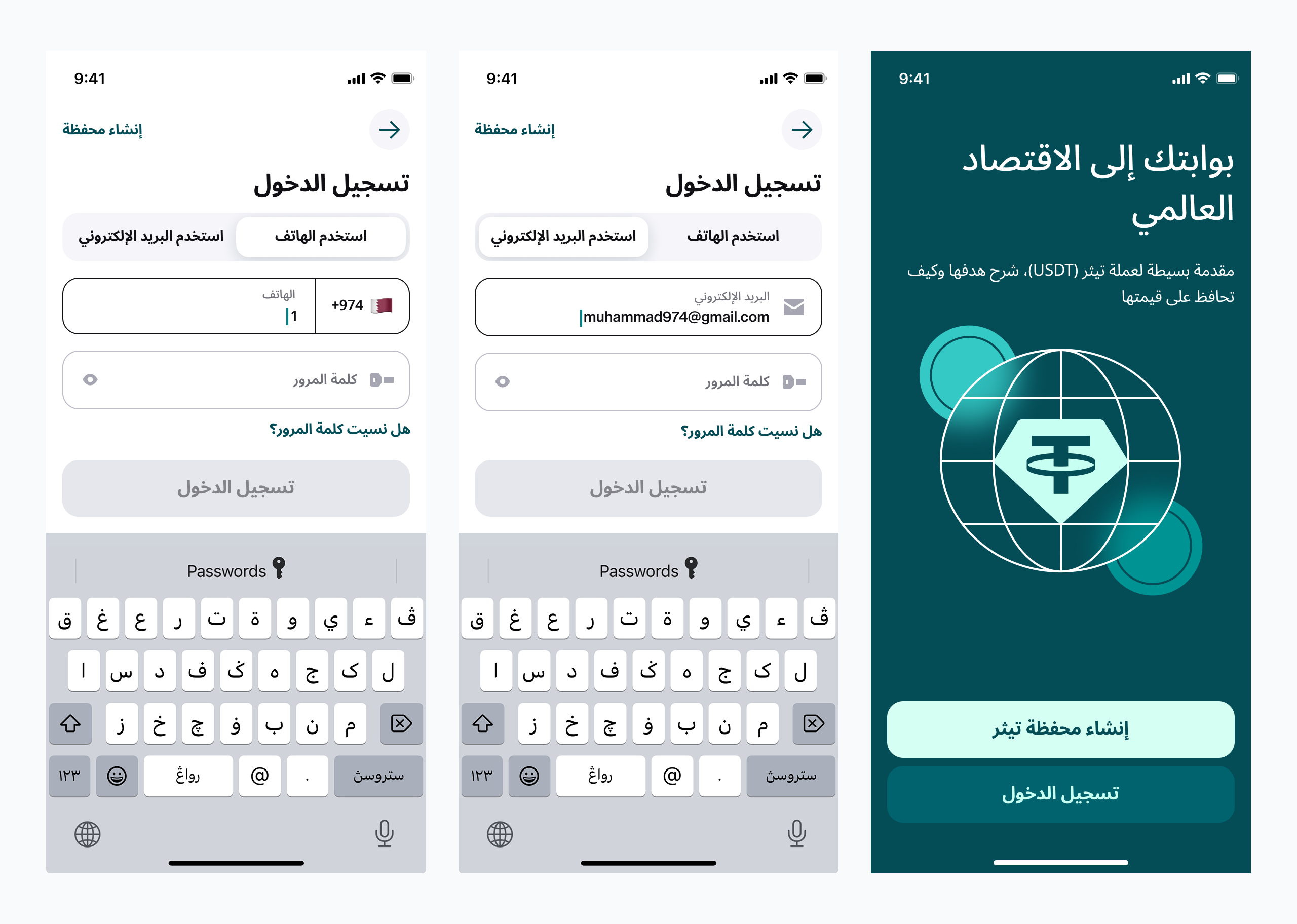
In RTL interfaces, when a field contains Latin digits and fits on a single line, the digits will be displayed left-to-right (LTR) within the RTL layout. The alignment should be adjusted based on the layout context—either filling the available width or centered, depending on the layout requirements.
Numeral Format: Western vs. Eastern Arabic
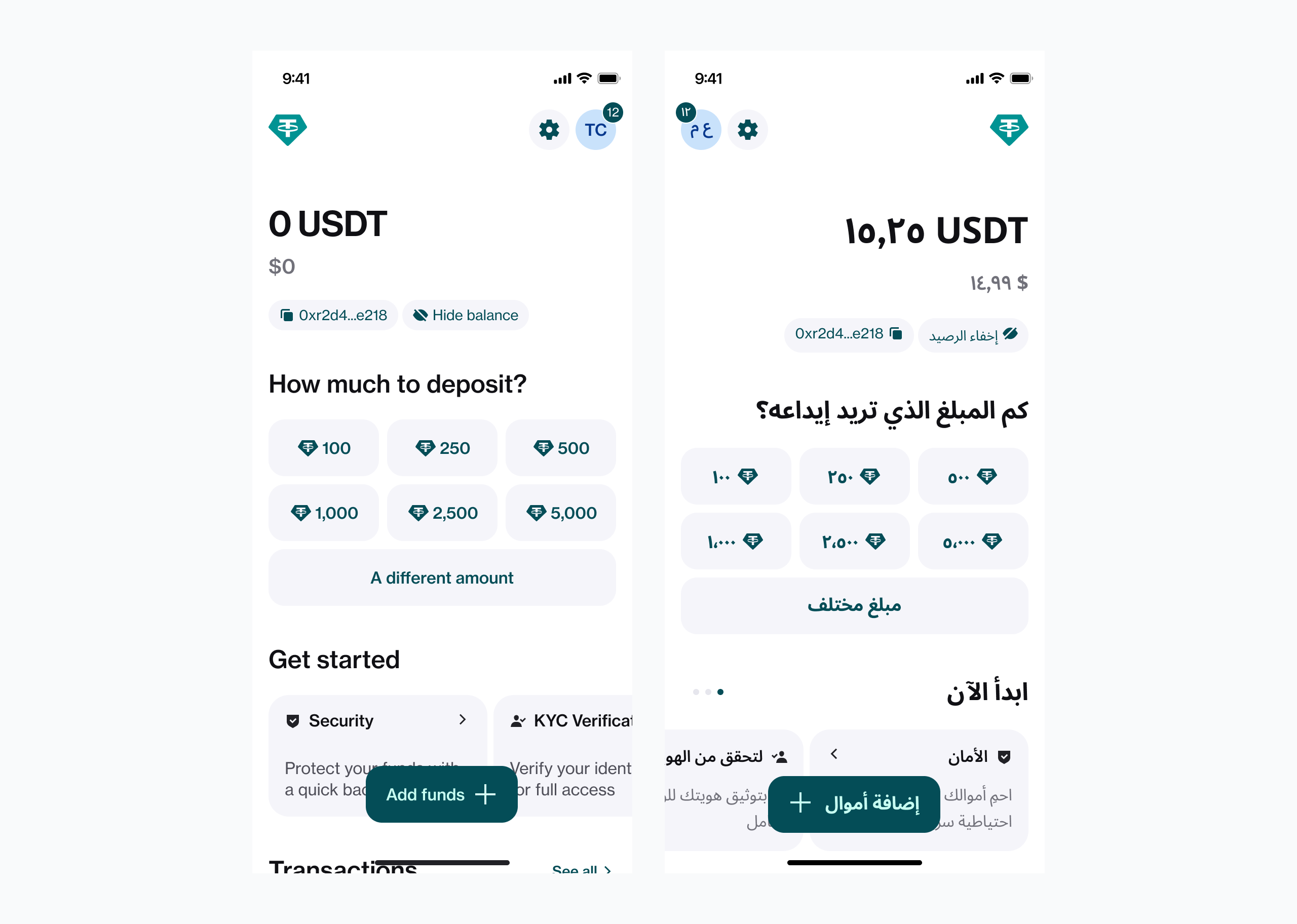
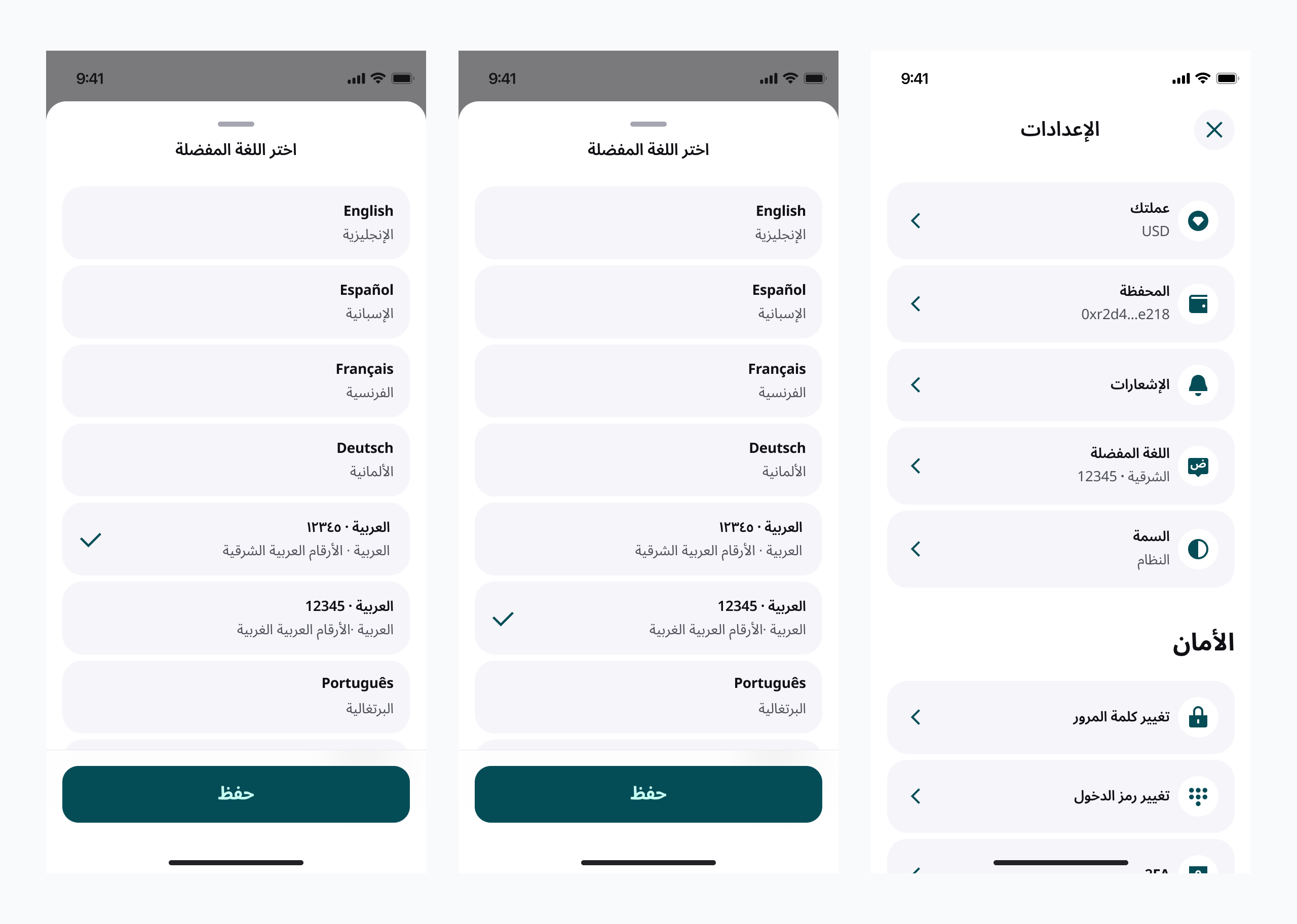
The use of Western and Eastern Arabic numerals varies across countries, regions, and even within areas of the same country. For example, some users in the Gulf may prefer Eastern numerals (e.g., ١٢٣٤), while others are more accustomed to Western numerals (1234).
The best practice is to give users the option to choose their preferred numeral format when selecting their language. This approach ensures better localisation and user comfort, particularly in finance apps where precision and familiarity are critical.
Mastering Typography
When designing for RTL languages like Arabic, align text according to reading direction, not by mirroring English layouts. Maintain right alignment for both numbers and mixed-language content, and adjust line height (by 10–40%) and font weight to accommodate Arabic script’s visual complexity and ensure consistency with Latin-based UIs.


Experience
Research and analysis
Experience vision and strategy
Concepting and prototyping
Motion
Operations
Iterative approach
Handoff
Prioritization and roadmapping
Design system
Brand
Industry research
Moodboards
Brand Identity application
Brand Identity assets
